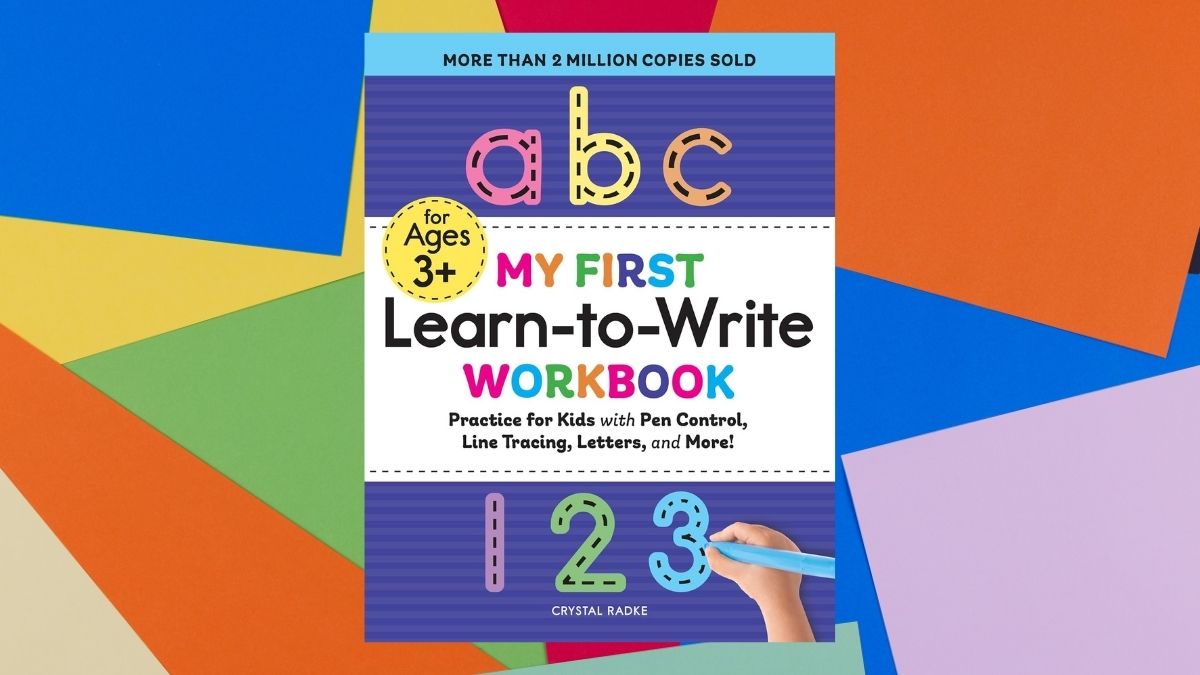
The journey to literacy begins long before a child reads their first word. With over 1 million copies sold, Crystal Radke’s My First Learn-to-Write Workbook has become a trusted tool for parents eager to build their preschoolers’ writing foundations. More than a workbook, it’s a carefully designed learning resource that blends developmental science with engaging activities.
Former kindergarten teacher Melissa Middlebrook describes it best, calling it “the exercises necessary to get a strong start in letter and number formation.” But what exactly makes this workbook stand out—and why is it such a valuable investment for children ages 3–5?
The Developmental Science Behind the Workbook
Before diving into the details of what’s inside, it’s worth looking at the developmental philosophy guiding its design.
- Research-Backed Progression – Children start with simple strokes before advancing to letters, ensuring each skill builds on the last.
- Strengthening Fine Motor Skills – Tracing and shape exercises develop the small muscles needed for pencil control.
- Confidence Through Success – Activities are scaffolded to prevent frustration and promote steady improvement.
- Age-Appropriate Design – The large 8.5 x 11 format provides space for practice, perfectly suited to preschool learners.
What’s Inside: 75+ Engaging Practice Pages
Each section introduces new skills in a child-friendly way, keeping learning both structured and fun.
- Pen Control Basics – Tracing straight, curved, and zigzag lines to build pencil control.
- Shape Formation – Circles, triangles, and squares that double as math readiness exercises.
- Letter Guidance – Step-by-step uppercase and lowercase writing practice with directional arrows.
- Number Writing – Digits 0–9 paired with counting activities for math foundations.
- Interactive Activities – Connect-the-dots and fill-in-the-blank exercises that blend fun with skill-building.
- Visual Engagement – Playful illustrations to hold attention and encourage focus.
From Educator to Author: Crystal Radke’s Expertise
The effectiveness of this workbook stems directly from Radke’s professional background.
- Classroom Experience – Her time as a kindergarten teacher shapes the practicality of each activity.
- Developmental Knowledge – Activities follow natural learning milestones for preschoolers.
- Series Reputation – As part of the My First Preschool Skills Workbooks series, this title benefits from a proven educational framework.
- Enduring Popularity – Since its 2019 release, it has consistently remained on bestseller lists.
Parent-Approved Teaching Methods
Parents appreciate the workbook not just for what it teaches, but how it fits into daily life.
- Encourages Independence – Clear directions allow children to work with minimal supervision.
- Practical for Busy Families – Short, manageable activities fit into tight schedules.
- Attention-Span Friendly – Designed for completion in brief sessions to avoid overwhelm.
- Visible Progress – Children and parents can track improvement with each page.
- Positive Reinforcement – Built-in opportunities to celebrate success keep motivation high.
Preparing Children for Kindergarten Success
This workbook does more than teach writing—it sets the stage for future academic achievement.
- Fine Motor Readiness – Strengthens hand muscles for pencil use.
- Letter Recognition – Lays a foundation for reading.
- Pencil Grip Practice – Builds correct habits from the start.
- Writing Mechanics – Introduces directionality, spacing, and layout.
- Classroom Familiarity – Prepares children for worksheet-style tasks in kindergarten.
Beyond Writing: Additional Skills Developed
The workbook extends its impact by supporting broader early childhood development.
- Cognitive Growth – Pattern and sequence activities sharpen logical thinking.
- Language Development – Letter association fosters vocabulary and phonological awareness.
- Math Foundations – Counting and number tracing connect writing with numeracy.
- Creative Expression – Drawing elements encourage imagination and spatial awareness.
- Executive Function Skills – Following directions strengthens focus and planning abilities.
- Confidence & Emotional Growth – Success builds a love for learning.
Your Child’s Writing Journey Starts Here
When you open My First Learn-to-Write Workbook with your child, you’re giving them more than a practice book—you’re giving them a confident start to their educational journey. Its 84 pages strike the right balance between structured practice and engaging fun, making it ideal for homeschooling, preschool prep, or kindergarten readiness.
Available on Amazon, this workbook remains part of the Amazon New Bestsellers in Children’s Handwriting Books category, where families continue to trust it for early writing success. Parents exploring this category will find even more resources to support their child’s growth, but Crystal Radke’s workbook stands as a proven classic.