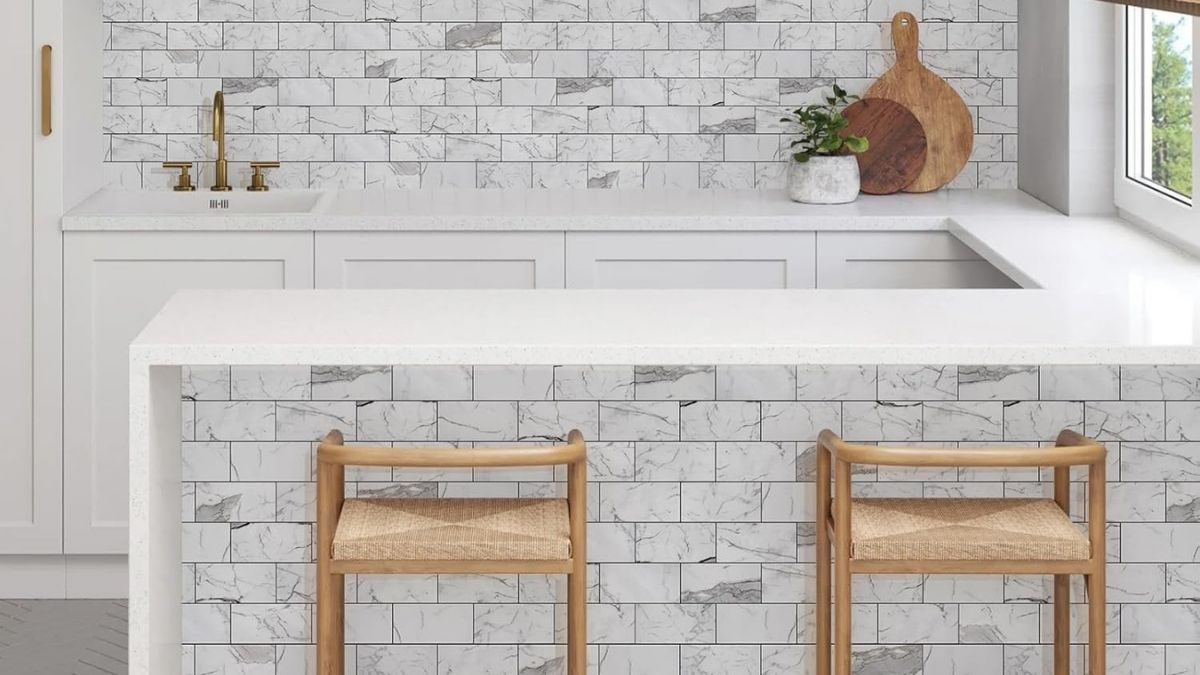
If you want your kitchen or bathroom to look cleaner and brighter without committing to a full remodel, peel-and-stick backsplash panels can be a practical middle ground.
Vamos Tile’s Glossy Statury White style aims to give you a ceramic-like subway tile look with a quicker install and lower friction than traditional tilework.
That said, it’s not a perfect fit for every space. Below, you’ll see what works well, what to watch for, and how to decide if this approach matches your goals.
What you get with Vamos Tile (and what you don’t)
Vamos Tile peel-and-stick backsplash panels are built for speed and convenience. You avoid grout, mortar, and most specialty tools. In return, you’re relying on adhesive performance and proper surface prep.
Here’s the trade-off in a quick table:
| Category | Peel-and-stick (Vamos Tile) | Traditional tile |
| Install time | Typically hours | Often days |
| Tools needed | Basic (knife, straightedge) | Tile cutter, spacers, grout tools |
| Mess level | Low | High (dust, mortar, grout) |
| Seam/grout lines | Minimal or none | Standard grout lines |
| Permanence | Semi-permanent | Permanent |
| Surface tolerance | Needs smooth, clean wall | Can correct some unevenness |
The look: why people like Statury White
If you want a classic finish, subway-style white remains one of the safest design choices. The glossy surface can also help your room feel brighter because it reflects light.
Multiple perspectives to consider:
- If you love a crisp, modern finish: Glossy white can make cabinets and counters feel more “new.”
- If you prefer softer, matte design: High gloss may feel too reflective under strong lighting.
- If you’re matching existing tile: The look can be close, but it may not be identical to real ceramic when viewed up close.
Installation: simple, but prep matters
You can install these panels with a basic workflow: measure, cut, peel, and press. That simplicity is the main reason people choose them.
Use bullets when you plan your install:
- Clean the wall until it’s free of grease, dust, and residue.
- Make sure the surface is smooth and dry.
- Dry-fit your first row so your alignment stays straight.
- Cut carefully around outlets and edges.
- Press firmly across the entire panel to activate adhesion.
Objection: “Will it actually stick long-term?”
It can, but results depend on surface conditions. Adhesive-backed products perform best on smooth, sealed, clean walls. If your wall is textured, dusty, damp, or oily, adhesion can weaken over time.
Limitation: uneven walls and heavy texture
Traditional tile can sometimes “cheat” minor wall imperfections. Peel-and-stick panels usually can’t. If your wall has deep texture or uneven dips, the finish may show flaws or lift at edges.
Where it tends to work best in your home
These panels are popular in kitchens and bathrooms because they’re fast to install and easy to wipe down.
Good fits:
- Kitchen backsplash behind counters
- Vanity backsplash in bathrooms
- Laundry room splash zones
- Small accent sections where you want a quick style boost
Be cautious with:
- Rough brick or highly textured walls
- Areas that stay consistently wet (not just occasional splashes)
- Surfaces that are peeling, chalky, or poorly painted
Maintenance and durability: what to expect day-to-day
If you want low maintenance, peel-and-stick surfaces are appealing because you’re not scrubbing grout lines.
Pros you’ll notice:
- Quick wipe-clean upkeep
- No grout discoloration
- Less risk of chips compared to brittle ceramic
Potential drawback:
- You may need to avoid harsh abrasives that can dull glossy finishes over time.
Value: cost savings vs. long-term expectations
From a budget perspective, peel-and-stick backsplashes often save money because you’re cutting labor and avoiding extra supplies. If you’re updating a space before selling, refreshing a rental, or upgrading a secondary bathroom, this can be a strong value move.
Another perspective:
If you want a “forever” kitchen and you’re already doing major renovations, traditional tile may still make sense because it’s the long-term, fully permanent solution.
The decision checklist: is it right for you?
Use this table to make a quick call:
| If you want… | You’ll likely prefer… |
| Fast install, minimal mess | Vamos Tile peel-and-stick |
| Easy cleaning, no grout care | Vamos Tile peel-and-stick |
| Perfect authenticity up close | Traditional tile |
| Best performance on uneven walls | Traditional tile |
| A reversible style update | Peel-and-stick |
A practical way to try before you commit
If you’re unsure, starting with a small set is a smart move. You can test:
- How glossy white looks in your lighting
- How well it sticks to your wall surface
- Whether you like the seam visibility after installation
For official dimensions, finish details, and care guidance, check Amazon before planning your final layout.