Smart thermostats and video doorbells are “always on” devices. That is great for app control and alerts, but it also means they need dependable power. If your setup lacks a C-wire, you may see random disconnects, low-battery warnings, or devices that reboot at the worst time.
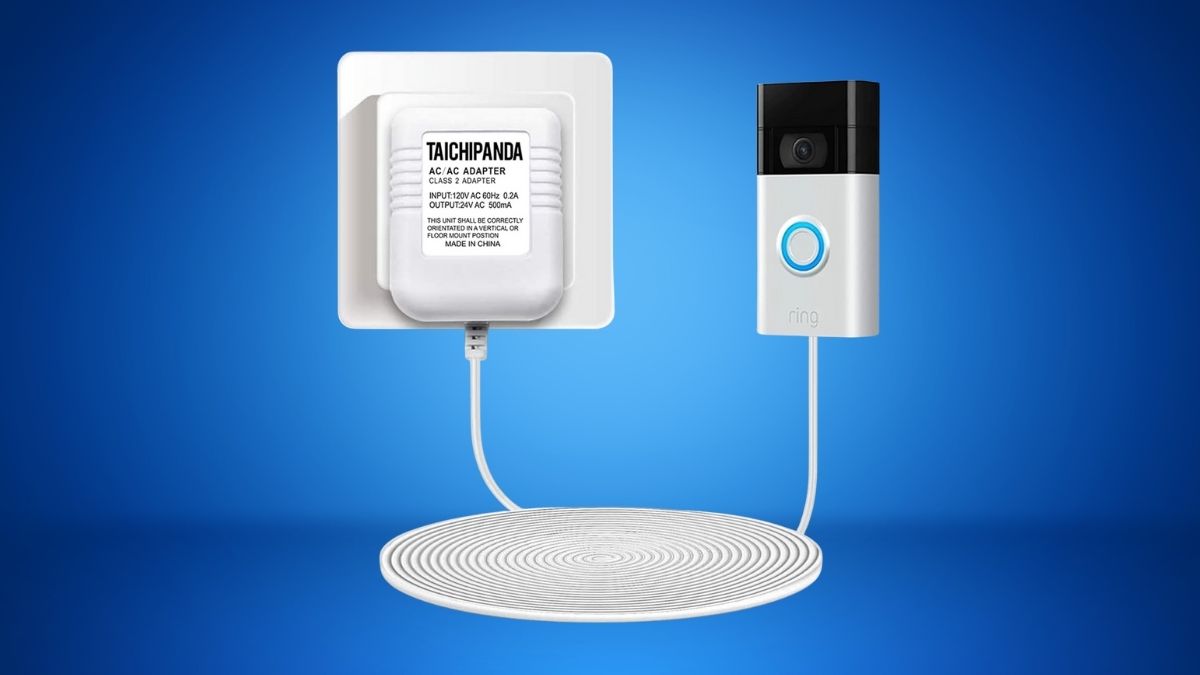
The TAICHIPANDA 24 Volt Transformer is built to provide a stable 24VAC supply, often acting like a simple C-wire workaround. It is commonly used for smart thermostats and wired doorbells that struggle with weak or inconsistent power.
What this transformer actually does
At a basic level, it converts standard household power into low-voltage 24VAC. That output is what many HVAC controls and smart home accessories expect.
Before you treat it as a universal fix, it helps to separate two use cases:
- Thermostats: You are often adding a “common” power path so the thermostat can run Wi-Fi and a display reliably.
- Doorbells: You are often replacing an underpowered transformer or bypassing a questionable existing one.
Specs you should check first
You do not need to be an electrician to verify the basics. You just need to match voltage type, voltage level, and current capacity.
Here is the quick-read spec table based on the common listing details for this model:
| Spec | What it means for you |
| Input | Plugs into standard 120V AC power |
| Output | 24V AC (24VAC) for low-voltage devices |
| Current capacity | Around 500 mA (enough for many single-device installs) |
| Cable length | Roughly 6.4 ft for flexible placement |
Limitation to keep in mind: 24VAC is common, but not universal. Some devices require a different range (or specify a minimum VA rating). Always confirm your device label or manual before installing.
Thermostat compatibility: what usually works, and where you can run into friction
Most smart thermostats are designed around 24VAC HVAC control power. When a C-wire is missing, they may “power steal,” which can cause instability.
This transformer is often used with:
- Nest thermostats (varies by model and wiring layout)
- Honeywell Wi-Fi thermostats
- Ecobee thermostats
- Sensi thermostats
A realistic objection: “My thermostat works fine without a C-wire.”
That can be true, especially in mild climates or with systems that tolerate power stealing. The tradeoff is reliability. If you see Wi-Fi dropouts, screen flicker, or battery drain, a dedicated 24VAC feed can reduce those symptoms.
Another limitation: If your HVAC system has unusual wiring (heat-only, proprietary terminals, or multi-stage complexity), adding external power incorrectly can create control issues. If your wiring does not match your thermostat guide, it is worth getting an HVAC tech to confirm the terminals.
Doorbell compatibility: why stable 24VAC can matter more than you think
Video doorbells draw more power when features kick in. Motion detection, night vision, and two-way audio can all increase demand.
This transformer is often used with:
- Nest Hello (wired)
- Ring / Ring Pro setups (installation scenario matters)
- SkyBell
- Wyze wired doorbells
- Zmodo wired doorbells
Potential objection: “My existing doorbell transformer should be enough.”
Sometimes it is. But older doorbell transformers can be underpowered, worn, or mismatched to modern loads. If you notice buzzing, intermittent chimes, or camera reboots, power is a common culprit.
Practical caution: Some doorbell systems need specific chime compatibility or a bypass kit. A stronger transformer alone will not fix a chime that is not designed for your doorbell model.
Installation overview (without overcomplicating it)
Placement matters as much as wiring. You want a nearby outlet, decent airflow, and a clean route for the cable.
Common best practices:
- Turn off power at the breaker before doing any work
- Mount the transformer where the cable is not under tension
- Keep it away from moisture and heat sources
If your install requires modifying household wiring beyond plugging into an outlet, local codes may require a licensed electrician. That is not overkill—it is just the safe call.
When this is a good buy, and when it is not
You will usually benefit from this transformer if:
- Your thermostat lacks a C-wire and acts unstable
- Your wired doorbell reboots or drops video under load
- You want a cleaner solution than “power stealing” or battery dependence
It may not be the right fit if:
- Your device requires a different voltage range or higher VA/current
- Your wiring is non-standard and you cannot confirm terminals safely
- You are powering multiple devices from one transformer without verifying total load
Bottom line: Think of it as a reliability upgrade, not a magic compatibility adapter.
This item is part of Amazon Haul in the Home Improvement & Electrical category. You can explore more transformers, C-wire adapters, and smart home power accessories within the same section.